Industrial · · 3 min read
Prototype Models Explained — Types of Prototypes and How to Choose a Prototyping Service
Types of prototypes (concept, appearance, functional, engineering, display), rapid prototyping methods (3D printing, CNC machining, vacuum casting, sheet metal) and how to choose a prototyping company for product and exhibition models.
By the SZT Model project team · Reviewed by David Wang
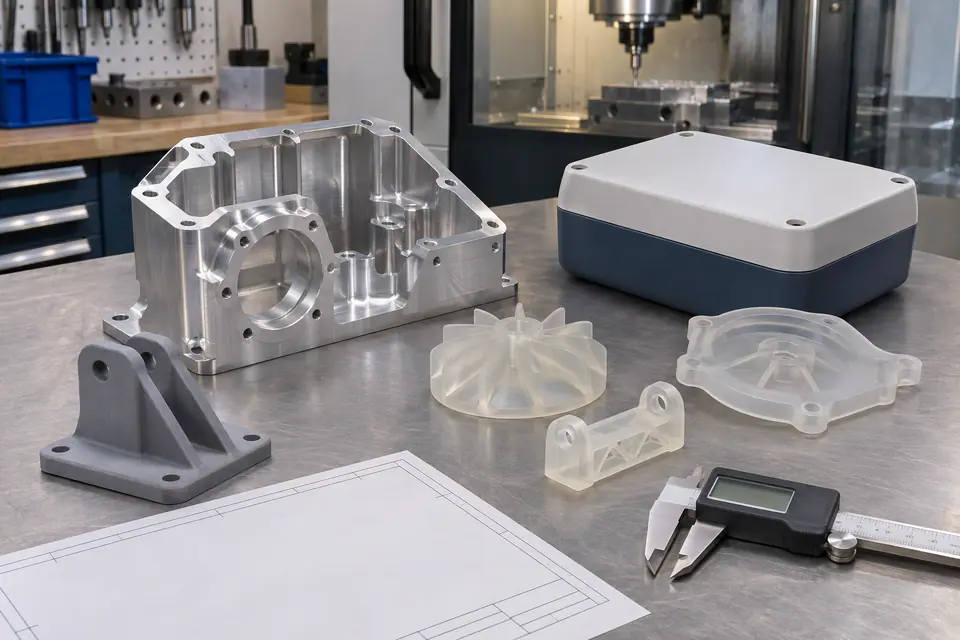
Short answer: Prototypes fall into five main types — concept models, appearance (looks-like) models, functional (works-like) prototypes, engineering or pre-production prototypes, and display or exhibition models. Rapid prototyping services make them with 3D printing (SLA, SLS, FDM, metal), CNC machining, vacuum casting and sheet-metal work; choose the method by what the prototype must prove: look, fit, function or durability.
"Prototype" covers everything from a foam block on a designer's desk to a pre-production unit that passes certification. Knowing which prototype you need is the fastest way to brief a prototyping company — and to avoid paying for precision you do not need.
The five types of prototypes
| Type | Question it answers | Typical method |
|---|---|---|
| Concept model | Is this the right idea and size? | Foam, FDM print, cardboard |
| Appearance (looks-like) model | Does it look and feel right? | SLA print or CNC, painted and textured |
| Functional (works-like) prototype | Does the mechanism work? | SLS/MJF nylon, CNC aluminium, off-the-shelf parts |
| Engineering / pre-production prototype | Will it pass tests and assemble on the line? | CNC, vacuum casting, sheet metal, soft tooling |
| Display / exhibition model | Can buyers see the product before it exists — or at a size they can handle? | Scale or oversized models, cut-aways, lighting |
What is a functional prototype?
A functional prototype is built to work, not to look finished. It proves mechanisms, tolerances, thermal behaviour or user interaction, using materials close enough to production that test results are meaningful. A product can need several functional rounds before its appearance model is even started.
Rapid prototyping methods compared
| Method | Strengths | Limits |
|---|---|---|
| SLA / DLP 3D printing | Smooth, fine detail, clear parts | Brittle compared with production plastics |
| SLS / MJF 3D printing | Tough nylon, no supports, complex shapes | Grainy surface |
| FDM 3D printing | Cheap, fast concept parts | Visible layers |
| Metal 3D printing (SLM/DMLS) | Complex metal parts | High cost per part |
| CNC prototype machining | Real metals and engineering plastics, tight tolerances | Geometry limited by tool access |
| Vacuum casting | 10–50 copies in PU from one master | Needs a master; silicone moulds wear |
| Sheet-metal prototyping | Enclosures, brackets | Bend and thickness rules |
Choosing a prototyping company
- Can they offer several processes, so the method fits the question rather than the vendor's machine?
- Do they finish parts — sanding, painting, texture, silk-screen — for appearance models?
- How do they protect your IP (NDA, file handling)?
- Do they give design-for-manufacture feedback?
- Can they produce display versions for trade shows and investor meetings?
Where SZT Model fits
SZT Model is primarily an architectural and industrial display model maker. Our 3D printing, CNC engraving, laser and painting departments produce appearance and exhibition prototypes: oversized product models, cut-away machinery models, packaging and product display models, and factory and production-line models. For engineering prototypes that must pass mechanical testing, a specialist engineering prototype shop is the better choice.
Frequently asked questions
What are the main types of prototypes?
Concept models, appearance (looks-like) models, functional (works-like) prototypes, engineering or pre-production prototypes, and display or exhibition models.
Is 3D printing or CNC machining better for prototypes?
3D printing is faster and cheaper for complex shapes and early iterations; CNC machining is better when the prototype must be made from real metals or engineering plastics with tight tolerances.
How many prototypes does a product usually need?
Most products go through several rounds: one or two concept models, multiple functional iterations and at least one pre-production prototype, plus appearance models for marketing.
Can a prototype be made larger than the real product?
Yes. Oversized display prototypes are common for small products such as chips, connectors or medical devices, so details can be seen at trade shows.
Related service
Industrial & Energy Display Models — Factory layouts, production lines, energy systems and construction machinery — engineered models that make complex operations easy to grasp.