Technology · · 3 min read
3D Printing vs CNC vs Handcraft in Architectural Model Making
How modern model makers combine large-format 3D printing, CNC engraving, laser cutting, UV printing and hand finishing — and which technique suits which part of a model.
By the SZT Model project team · Reviewed by David Wang
Short answer: No single technique makes a great architectural model. 3D printing suits curved and complex forms, CNC engraving gives crisp flat facades and structural parts, laser cutting handles fine thin details, UV printing produces site bases and textures, and hand finishing — colour, landscape and assembly — is what makes the model look real.
A visitor looking at a finished model sees one object. Behind it are five or six production methods, each chosen for what it does best.
3D printing: complex geometry
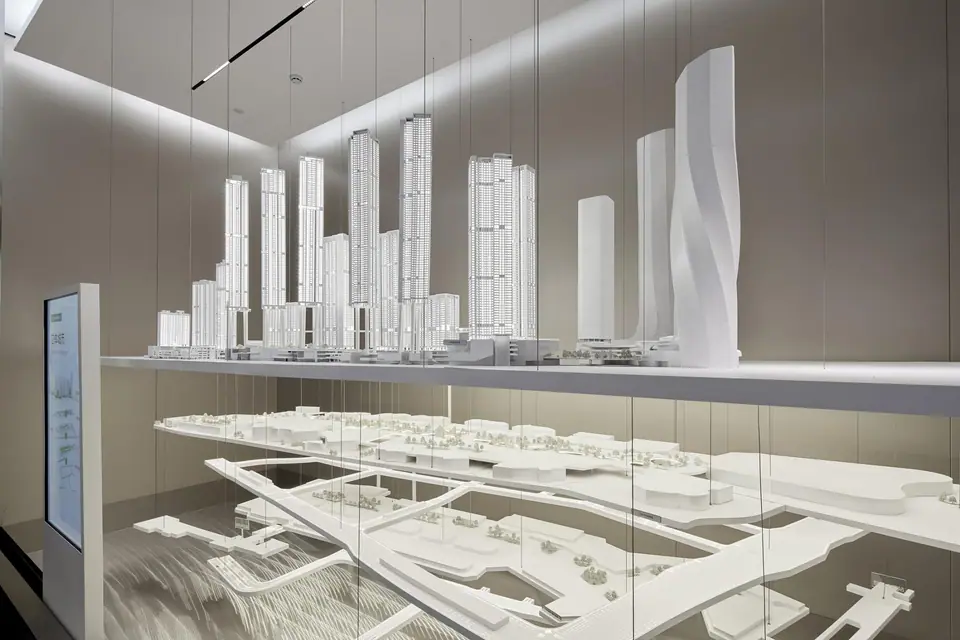
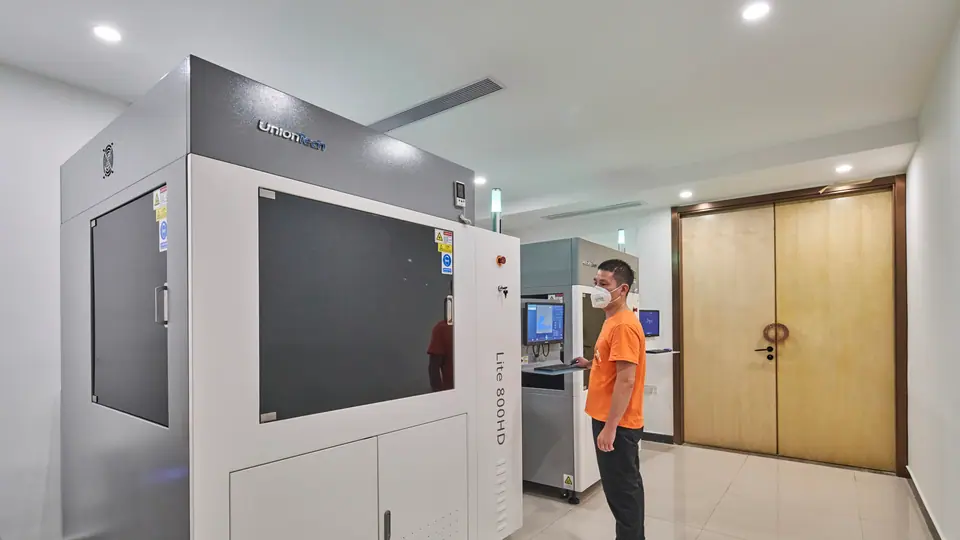
Large-format printers excel at anything curved, twisted or organic: parametric towers, sculptural podiums, terrain and figures. Printing from the same 3D master file the architects approved also guarantees that the model matches the design. Limits: printed surfaces need sanding and priming, and very large parts are printed in sections.
CNC engraving: precision on flat facades
CNC engraving cuts window grids, mullions, floor lines and structural parts from acrylic or ABS sheets with crisp edges and repeatable accuracy. It is faster than printing for orthogonal buildings and produces perfectly flat, transparent glazing. Our engraving workshop runs three Beijing Jingdiao machines and twelve Hongtai machines.
Laser cutting: thin and fine
Laser cutters make railings, louvres, fences and landscape detail that would be too fragile to machine. They are also ideal for layered terrain contours.
UV printing: bases and surfaces
Flatbed UV printers apply full-colour road networks, paving patterns, water textures and context imagery directly onto base panels. The result is sharper and more durable than paint, and gives the landscape team an exact guide for planting.
Hand finishing: what makes it real
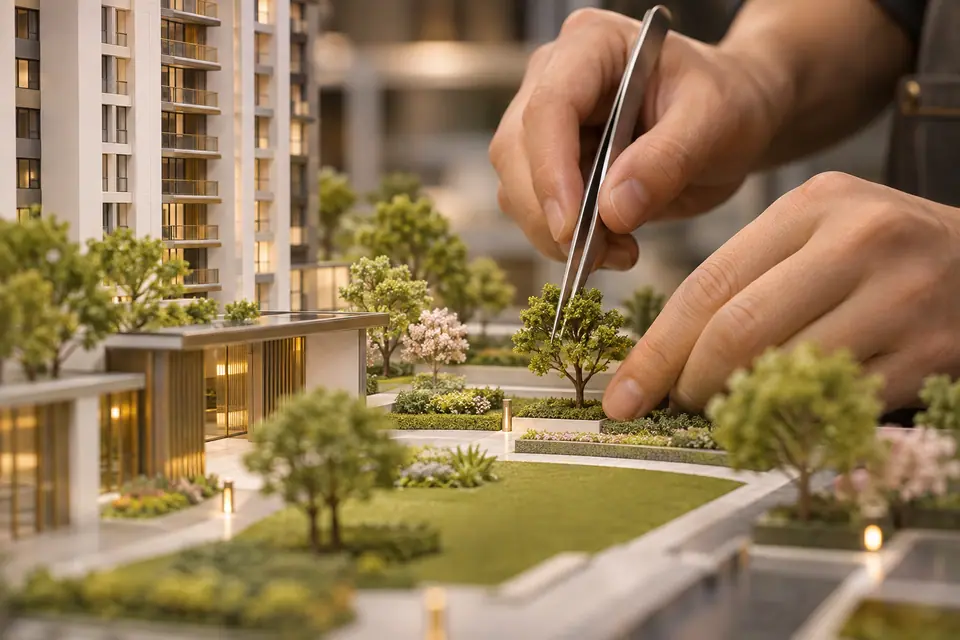
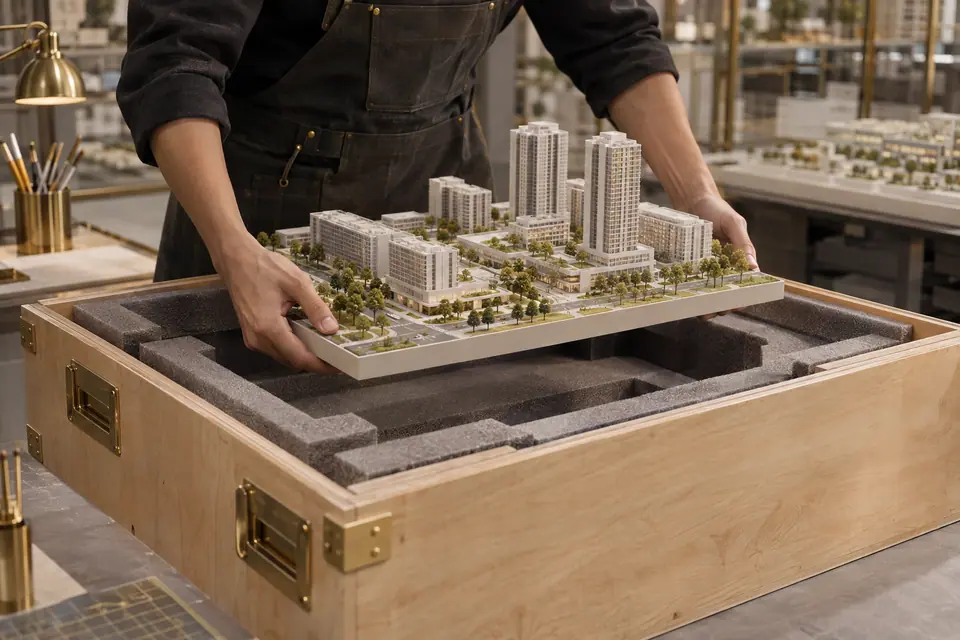
Machines produce parts; people make models. Our senior colourists mix and spray facades to approved samples, the landscape workshop styles every tree, and assemblers align thousands of components. This is also where lighting and mechanisms are installed and tested.
Choosing the mix
| Part of the model | Best method |
|---|---|
| Curved or parametric facades | 3D printing |
| Orthogonal towers, glazing | CNC engraving |
| Railings, louvres, fences | Laser cutting |
| Roads, paving, water, context | UV printing |
| Terrain | 3D printing or layered laser-cut contours |
| Trees and planting | Handcraft |
| Colour, assembly, lighting | Handcraft |
Want to see the equipment? Take the factory tour or book a visit.