Technology · · 3 min read
Model Lighting Guide — Miniature LEDs for Architectural and Scale Models
How to light architectural and miniature models: micro and 1 mm LEDs, LED strips, warm vs cool white, 3 V battery vs 12 V supplies, wiring, dimming, zoning and control systems — with a comparison table.
By the SZT Model project team · Reviewed by David Wang
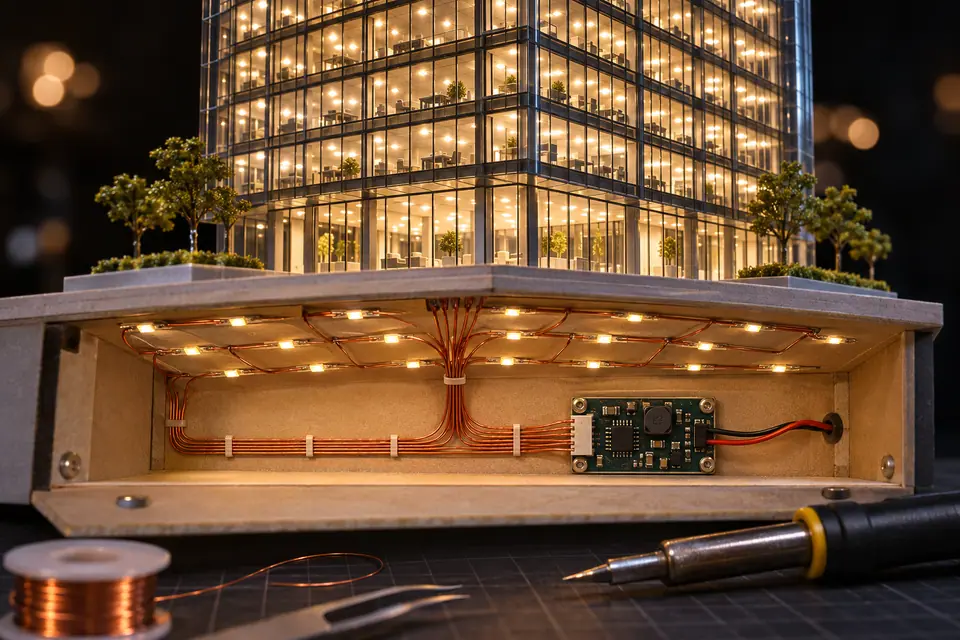
Short answer: Architectural and miniature models are lit with low-voltage LEDs: 0402/0603 SMD micro LEDs and 1 mm "grain of wheat" LEDs for windows and street lamps, thin LED strips for floors and facades, and fibre optics for points smaller than a millimetre. Small hobby models can run on battery packs; professional models use regulated 12 V or 24 V supplies with zoned, dimmable controllers and a burn-in test before shipping.
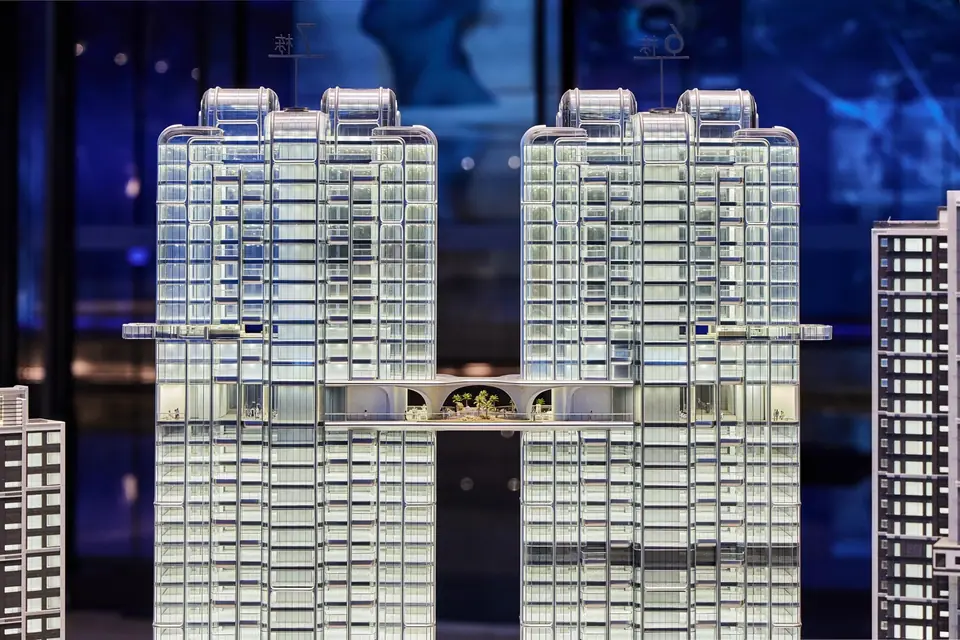
Lighting turns a model from an object into a scene. A tower glowing floor by floor, street lamps tracing a boulevard, a clubhouse lit from inside — these are the moments visitors photograph. This guide covers the components and decisions behind good model lighting, from hobby dioramas to sales gallery models. For lighting as part of the sales story, see lighting and motion in architectural models.
The LED toolbox
| Component | Size | Best for | Notes |
|---|---|---|---|
| SMD micro LED (0402, 0603) | 1.0 × 0.5 mm / 1.6 × 0.8 mm | Windows, lamp posts, car lights | Pre-wired versions with magnet wire are easiest |
| 1 mm / 1.8 mm LED ("grain of wheat") | 1 – 2 mm | Street lamps, interior lamps, model trains | Classic miniature lamp look |
| LED strip, narrow (3 – 5 mm) | Flexible | Floor slabs, facade bands, coves | Cut to length; diffuse behind acrylic |
| COB / edge-lit panels | Thin sheets | Even glow for curtain walls | Avoids hot spots |
| Fibre optics | 0.25 – 1 mm | Stars, tiny points, runway lights | One light source feeds many points |
| Mini spotlights | 3 – 6 mm | Highlighting landmarks, signage | Narrow beam |
Colour temperature
- Warm white (2700–3000 K): homes, hotels, street lamps — inviting at night scenes.
- Neutral white (4000 K): offices, retail, general illumination.
- Cool white (5000–6500 K): industrial, sports, "daylight" effects.
- RGB / tunable: day-to-night sequences and show effects.
LEDs that look like incandescent bulbs are simply warm white with a slightly orange bias; matching colour temperature across one model matters more than the exact value.
Power: battery or mains?
| Option | Voltage | Suits | Limits |
|---|---|---|---|
| Coin cell (button cell LED light) | 3 V | Single lamps, tiny dioramas | Hours, not days |
| AA / rechargeable pack | 3 – 6 V | Small craft lights and hobby models | Changing batteries |
| USB | 5 V | Desktop models, small displays | Limited current |
| Regulated 12 V / 24 V supply | 12 / 24 V | Professional and exhibition models | Needs proper wiring design |
Every LED needs current control — a resistor for each LED or string, or a constant-current driver. Running LEDs gently below their maximum current makes them last far longer and run cooler inside a closed model.
Wiring a model properly
- Plan zones before building: by building, floor, amenity, road or phase.
- Use enamelled magnet wire inside buildings; route bundles through hollow cores to the base.
- Bring all connections to labelled terminal blocks in an accessible base compartment.
- Light-proof interiors so light does not bleed through walls; black-paint the inside of facades.
- Diffuse with frosted acrylic so viewers see a glow, not a dot.
- Burn-in test for at least 24 hours before packing.
Control systems
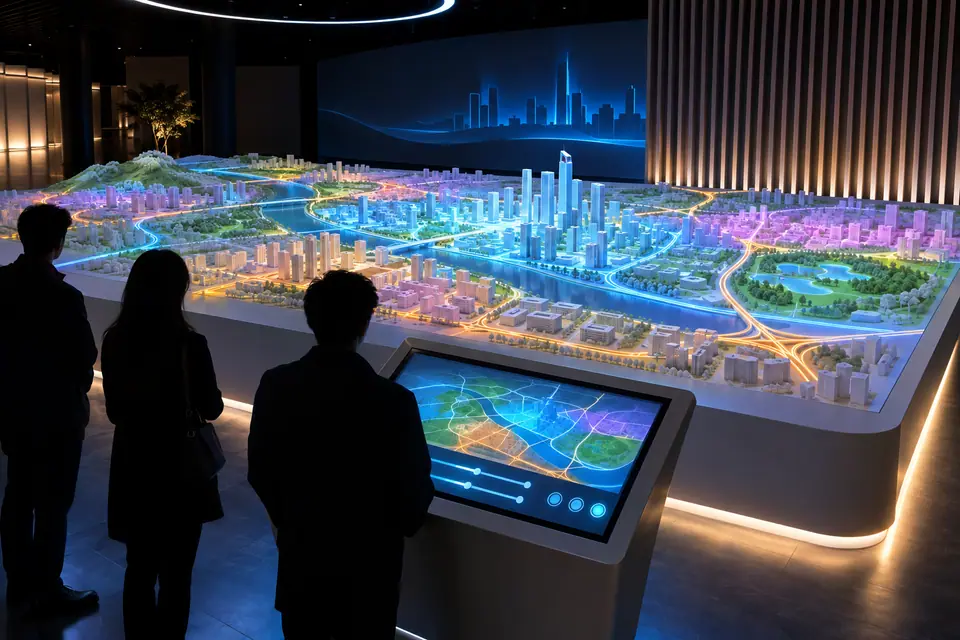
Hobby model lighting kits use a switch or remote control. Professional models use DMX or programmable controllers: dimming, scenes, timers, touch screens, and integration with video walls or interactive sand table projection.
Scaling the lights
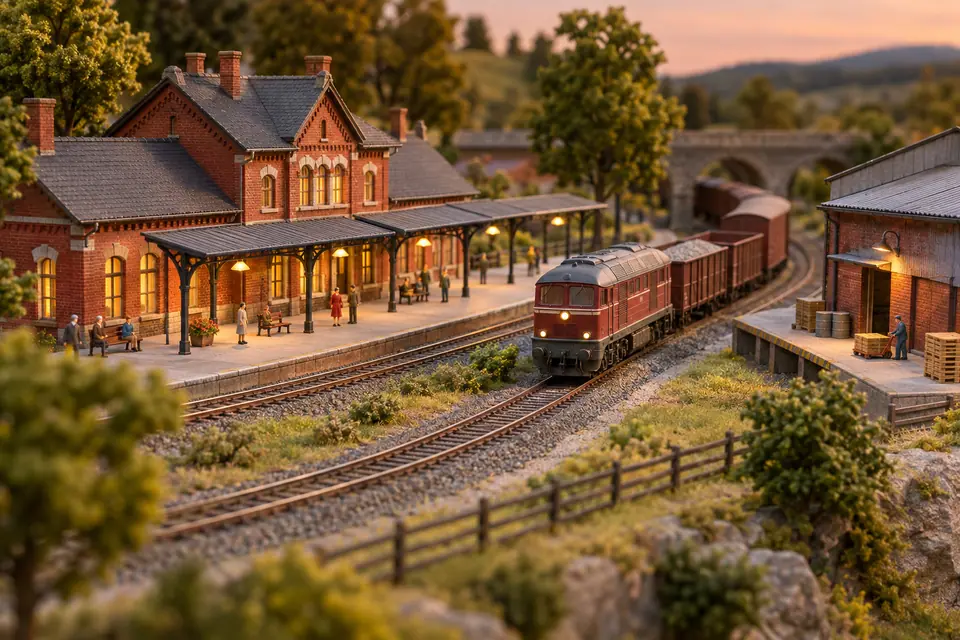
A lamp post at 1:100 is 4 – 6 cm tall, ideal for a 1 mm LED. At 1:500 street lighting is better suggested with fibre optics or a lit road surface. For HO-scale (1:87) railway buildings, micro LEDs and grain-of-wheat lamps are standard — see HO and N scale buildings.
Frequently asked questions
What are the smallest LEDs for models?
Pre-wired 0402 SMD LEDs, about 1.0 × 0.5 mm, are the smallest commonly used. For even smaller points of light, fibre optics carry light from a hidden LED.
Should model LEDs be 12 V or battery powered?
Small hobby models and single lamps can run on batteries or USB. Display and exhibition models should use a regulated 12 V or 24 V supply with resistors or constant-current drivers for each circuit.
How do you stop light leaking through model walls?
Paint the inside of walls black or line them with opaque material, seal joints, and use frosted acrylic only where light should be seen.
Can model lighting be controlled from a tablet?
Yes. Professional controllers support scenes, dimming and zoning from a touch screen or tablet, and can be linked to sales or presentation software.
Related service
Real Estate Sales Gallery Models — Masterplan sand tables, tower models and landscape models that help buyers understand a development before a single brick is laid.