Technology · · 3 min read
Lighting and Motion in Architectural Models
How programmable LED lighting, control systems, projection and kinetic mechanisms turn a static architectural model into a sales tool.
By the SZT Model project team · Reviewed by David Wang
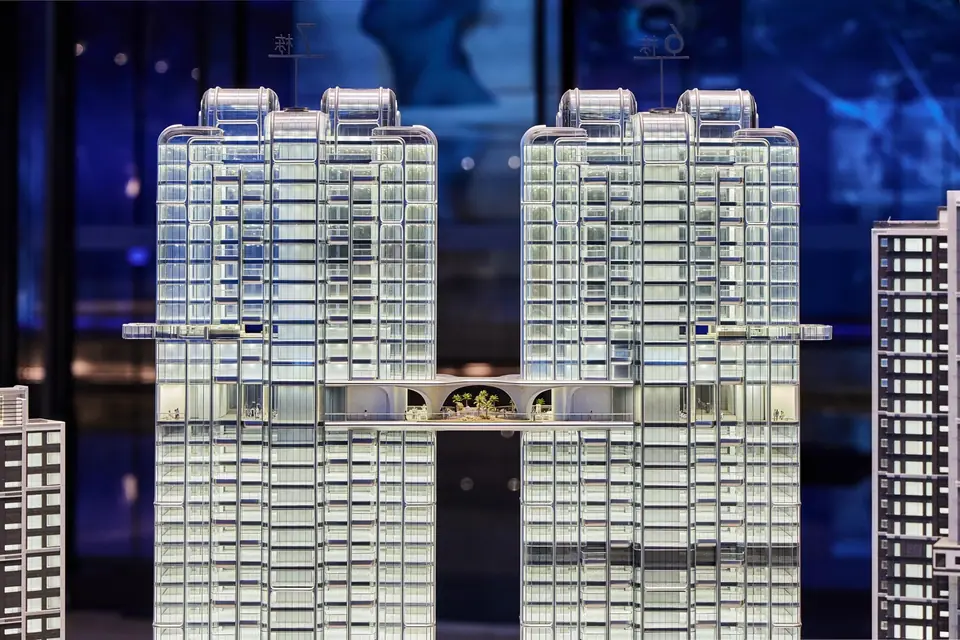
Short answer: Modern architectural models use zoned LED lighting, programmed day-to-night sequences, touch-panel or tablet control, projection synchronisation and small mechanisms such as moving facades. These let a sales team highlight individual buildings, amenities or routes during a presentation.
Lighting is the difference between a model people glance at and one they gather around. In sales galleries it is also a working tool: the presenter can light the tower a buyer is asking about.
Zoned illumination
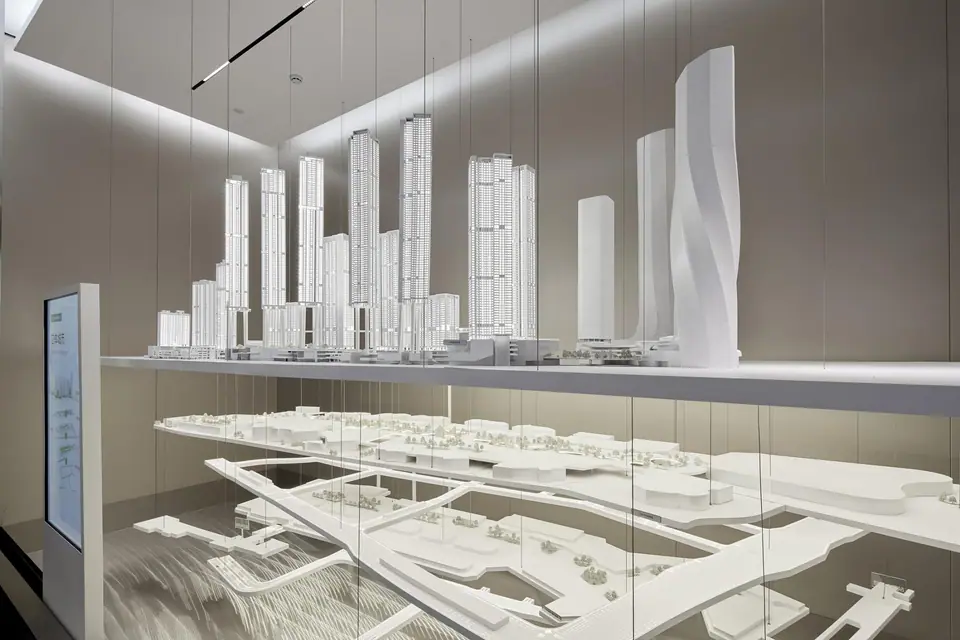
Each building, amenity or landscape area is wired as its own zone. Interior lights glow through the facades; street lights, pools and landscape uplights add atmosphere. Our lighting department designs the zones during 3D modelling so wiring paths are hidden inside the structure.
Programmed sequences
A typical sequence fades the whole model from day to dusk, then highlights phases of the development one after another. Sequences can be triggered from a touch panel, tablet or the gallery’s AV system.
Projection and screens
Models increasingly sit in front of LED walls or under projection rings. When the model and the content are designed together — as in our Tianjin TEDA Jinyun and Future City projects — the two read as one environment.
Kinetic models
Movement draws the eye like nothing else. Our mechanics department builds working mechanisms such as the moving facade of the Fosun Foundation Art Center model, rotating sections and sliding layers that reveal infrastructure below ground.
Reliability
Gallery models run for months, often all day. We use long-life LEDs, accessible drivers and documented wiring so lighting can be maintained without dismantling the model.