Technology · · 3 min read
Architectural Model Materials — Acrylic, ABS, Foam Board, Cardboard, Wood and Resin
A practical guide to architectural model materials and model building supplies: which materials suit study models vs presentation models, how laser cutting, CNC and 3D printing use them, and how professionals finish them.
By the SZT Model project team · Reviewed by David Wang
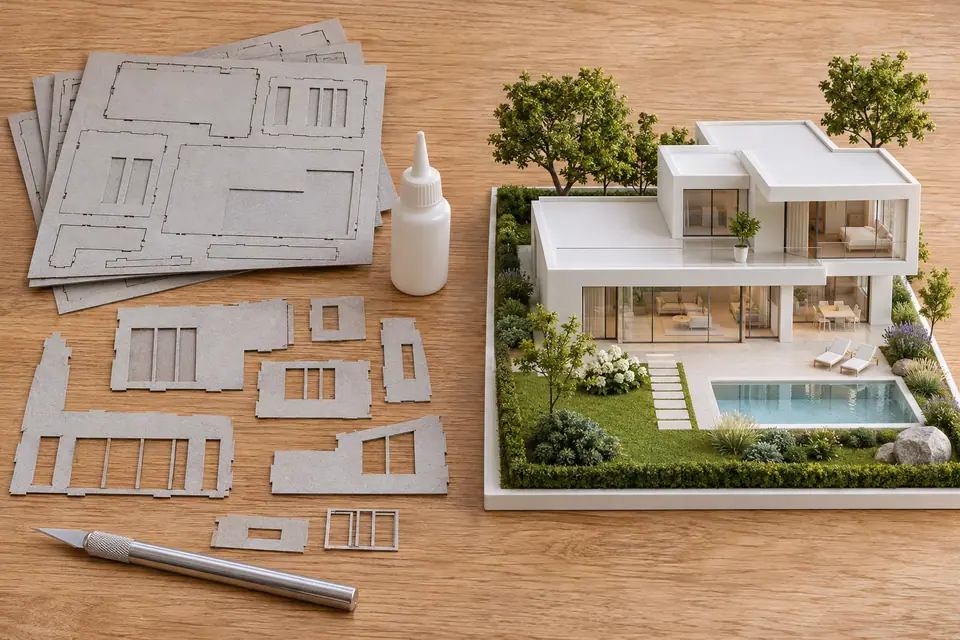
Short answer: Study and student models use cardboard, foam board, balsa and basswood because they are cheap and quick to cut by hand. Professional presentation models use acrylic (PMMA) and ABS cut by laser or CNC for crisp facades and glazing, 3D printed resin for complex forms, PU foam or modelling board for terrain, and resin for water — all spray-painted and finished so the material itself disappears.
The material of an architectural model is a design decision. A cardboard massing model says "work in progress"; a polished acrylic tower says "this will be built". Here is what professionals use, and why.
Material guide
| Material | Look and feel | Cutting method | Best for |
|---|---|---|---|
| Grey board / cardboard | Matte, honest, quick | Knife, laser cutter | Study and competition models, site contours |
| Foam board | Light, thick, soft edges | Knife, hot wire | Fast massing, student models |
| Balsa / basswood | Warm, natural | Knife, laser | Conceptual and timber-structure models |
| Acrylic (PMMA) | Crisp, clear or coloured, polishable | Laser, CNC engraving | Facades, glazing, presentation models |
| ABS sheet | Paintable, precise, stable | CNC engraving | Detailed facades, painted buildings |
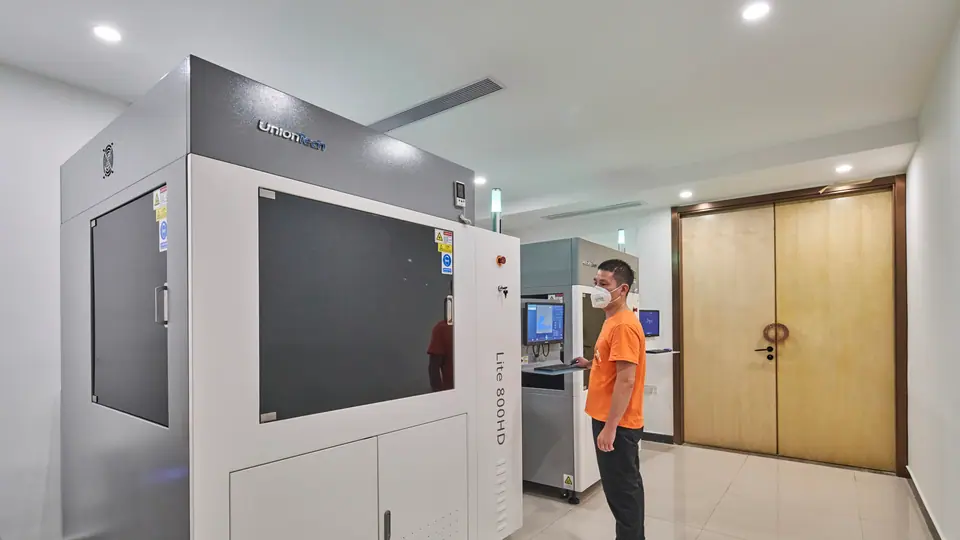
| 3D printed resin / nylon | Any form, smooth after sanding | SLA, DLP, SLS printing | Curved facades, organic roofs, ornament |
| PU foam / modelling board | Dense, machinable | CNC milling | Terrain, large massing |
| Epoxy / polyester resin | Clear, deep | Casting | Water, glass effects |
| Metal (brass, stainless etch) | Fine, strong | Photo-etching, laser | Railings, structures, fine mesh |
Study models vs presentation models
Study models test ideas fast: cardboard for architectural models, foam, wood and hot glue. Precision matters less than speed.
Presentation models are built to be photographed and inspected up close. Most professional studios build facades from acrylic or ABS, cut by CNC engraving machines and laser cutters, then sand, prime and spray-paint to match the architect's material palette. See types of architectural models.
Laser cutting and engraving in model making
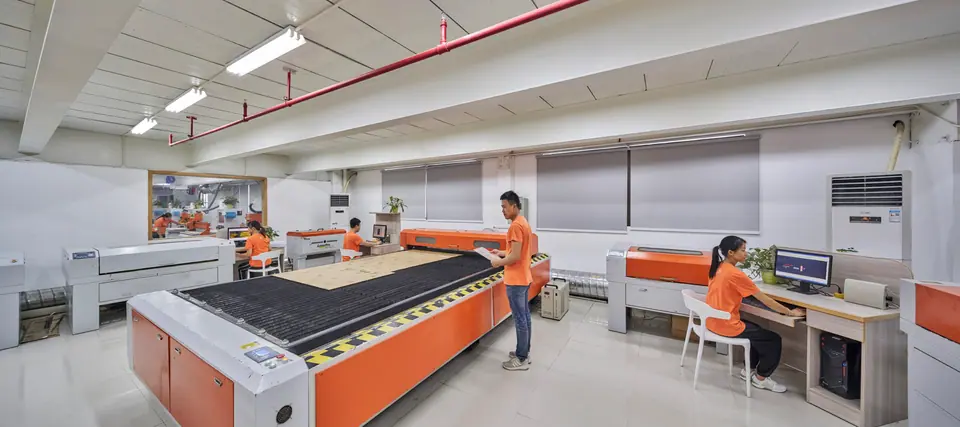
Laser cutters handle thin acrylic, board, wood and paper with very fine kerfs, which is why so many laser cutter projects are architectural. Laser engraving adds texture: brick coursing, timber boards, paving joints. CNC engraving machines cut thicker acrylic and ABS with clean, square edges and are used for facade panels and window mullions. For how printing compares, read 3D printing vs CNC vs handcraft.
Model architecture accessories
Trees, shrubs, people, vehicles, street furniture and lighting turn a building into a place. Hobby model building supplies offer generic accessories; professional landscape departments make trees by hand to match the planting plan in species, height and seasonal colour.
Textures and finishes
Digital material textures help when you visualise a design, but a physical model needs physical finishes: UV-printed paving and roof textures, spray-painted stone, frosted or tinted glazing, and metallic paint for cladding. Always approve colour samples under the lighting the model will live with.
Frequently asked questions
What is the best material for architectural models?
For quick study models, grey board, foam board and basswood. For presentation and sales models, acrylic and ABS cut by laser or CNC, combined with 3D printed parts and painted finishes.
What cardboard is used for architectural models?
Grey board (chipboard) from about 1 to 3 mm thick is the standard, with white mount board for cleaner looks. Both cut well with a knife or a laser cutter.
Can a laser cutter make a whole architectural model?
A laser cutter can make walls, floors, contours and facades from sheet materials, which covers most study models. Presentation models usually combine laser cutting with CNC engraving, 3D printing and hand finishing.
What are model building supplies?
Sheet materials, adhesives, cutting tools, paints and accessories such as trees, figures and vehicles. Professional model makers also use CNC machines, laser cutters, 3D printers and UV printers.
Related service
Real Estate Sales Gallery Models — Masterplan sand tables, tower models and landscape models that help buyers understand a development before a single brick is laid.