Guides · · 3 min read
Physical Model vs 3D Rendering vs Virtual Tour — What Sells Real Estate?
Architectural visualization compared: physical scale models, 3D architectural renderings, 360° virtual tours and VR for real estate — what each does best, typical lead times and how to combine them in a sales gallery.
By the SZT Model project team · Reviewed by David Wang
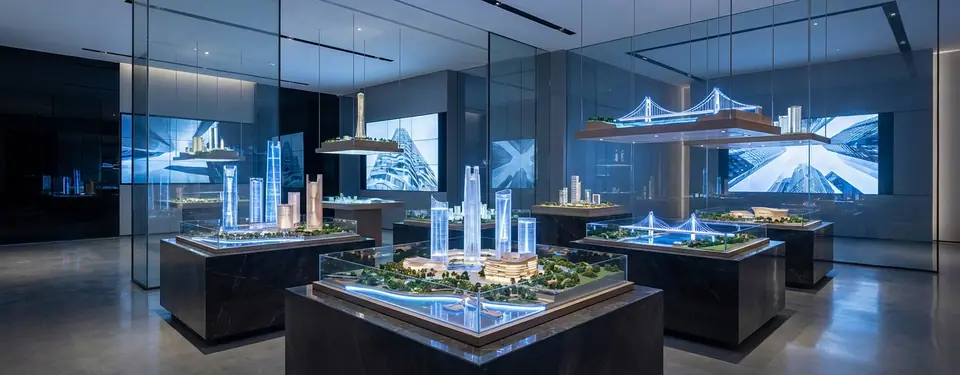
Short answer: Use 3D renderings for advertising and listings, virtual tours or VR for remote buyers and interior walkthroughs, and a physical scale model as the centrepiece of the sales gallery where buyers decide. Renderings sell the image, tours sell the interior, and the physical model sells the whole place — location, scale, views and phasing — to several people at once.
Architectural visualization now covers everything from photoreal 3D renderings and 360° virtual tours to VR headsets and AI-generated images. Developers often ask whether a physical model is still worth the budget. The honest answer is that each medium answers a different buyer question.
The four media at a glance
| Medium | Best at | Weak at | Typical lead time |
|---|---|---|---|
| 3D architectural rendering | Advertising, brochures, listings, facade mood | Showing the whole site and context honestly | 1–3 weeks |
| Animation / fly-through | Storytelling, launch videos | Interactivity, detail on demand | 3–8 weeks |
| 360° virtual tour / 3D real estate tour | Remote viewing, interiors, show flats | Masterplan understanding, social viewing | Days (built) to weeks (CGI) |
| VR headset experience | Immersion in a future apartment | Group viewing, comfort, throughput | 4–10 weeks |
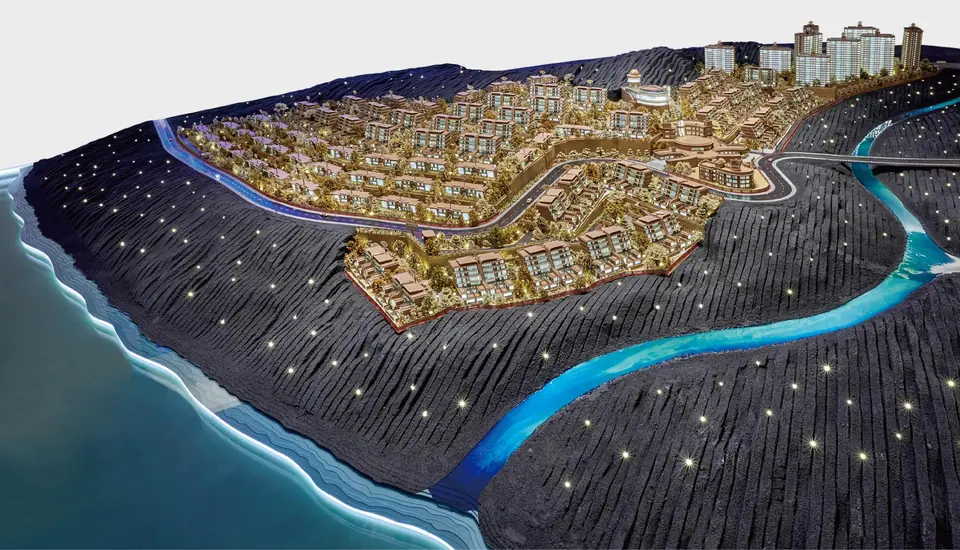
| Physical scale model | Masterplan, location, phasing, heights, group discussion | Showing interior finishes in detail | 4–8 weeks |
What 3D renderings do best
A 3D rendering of a building — or a 3D rendering of a modern house for a villa project — is the most efficient image for advertising. Architectural rendering services produce controlled views with ideal light, so renderings dominate websites, hoardings and portals. Their limitation is selection: buyers know a rendering shows the best angle.
3D interior rendering services fill the gap before a show flat exists, and they pair well with a furnished unit model.
What virtual tours and VR do best
Real estate virtual tours (360° photos of a built show flat, or a CGI tour of an unbuilt one) let overseas and out-of-town buyers walk through a home from a phone. Property virtual tour software and 3D real estate tours are cheap to distribute and track. VR goes further on immersion but is used one person at a time and needs staff support.
What only a physical model does
- Shows the whole truth at once. Neighbouring buildings, the park, the metro station and the view corridor are all visible with no camera choice.
- Works for groups. Families decide together; a model is the only medium four people can explore at the same time.
- Builds trust. A heavy, detailed object signals delivery capability.
- Anchors the room. The sales gallery layout, lighting and visitor flow are designed around the model.
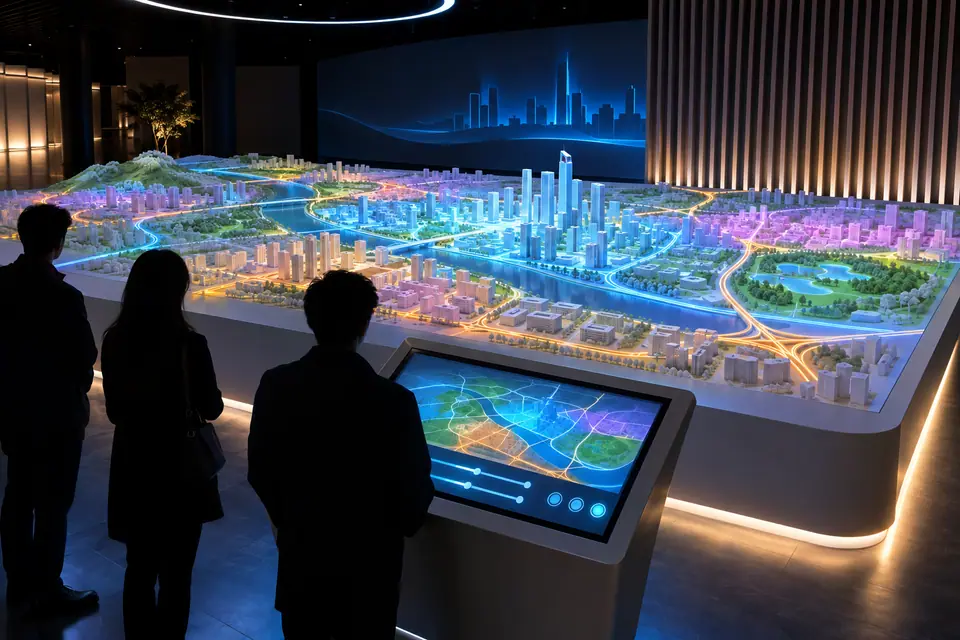
Modern models also borrow from digital media: interactive sand tables combine a physical model with projection mapping and touch-screen control.
How to combine them
- Before launch: renderings and a short animation for marketing.
- In the sales gallery: a masterplan model as the centrepiece, tower and unit models along the visitor route, a screen for the animation.
- For remote buyers: a virtual tour of the show flat and a video of the model with lighting sequences.
- After launch: photographs of the physical model become evergreen content for social media and listings.
Budget logic
Renderings are the cheapest per image; physical models are the largest single item but are used every day of the sales period, often for two or three years, and are photographed constantly. Divide the cost by the number of visitors who stand at the table and the model is usually the cheapest medium per serious buyer.
Frequently asked questions
Do buyers still want physical architectural models when VR exists?
Yes. VR is immersive but solitary. Developers still put a physical model at the centre of the sales gallery because families and investors make decisions together, and a model lets them do it around one table.
Can a physical model be used together with a virtual tour?
Yes. A common set-up links a touch screen to the model: tapping a tower lights it on the model and opens the matching virtual tour or floor plan on screen.
Which is faster to produce, a rendering or a model?
Renderings are faster — often one to three weeks. A sales-gallery model takes about four to eight weeks after drawings are final, so commission it at the same time as the marketing renderings.
Is a 3D printed model the same as an architectural rendering?
No. A rendering is a computer image; a 3D printed model is a physical object. Professional sales models use 3D printing for complex parts but are hand-finished, coloured, landscaped and lit.
Related service
Real Estate Sales Gallery Models — Masterplan sand tables, tower models and landscape models that help buyers understand a development before a single brick is laid.